How Much Does a Professional Logo Design Cost?
Logo design prices can range from a few hundred dollars to several thousand. Here’s what actually affects the cost — and what you should expect when hiring a professional logo designer.
If you have started looking for a logo designer, you have probably already discovered how difficult it is to understand what a logo should cost.
One designer may quote $300. Another may quote $3,000. A branding agency may quote $15,000.
Technically, they are all offering “logo design.”
But they are not necessarily offering the same service.
After designing more than 600 logos for over 500 clients across 46 countries, I have found that the more useful question is not simply:
How much should a logo cost?
It is:
What am I actually paying for — and what does my business need?
That is what I want to explain here.
How Much Does Logo Design Usually Cost?
There is no universal price for professional logo design.
As a rough guide, the market can range from inexpensive automated tools and marketplace services to several thousand dollars for an experienced independent designer, and substantially more for a branding agency or a comprehensive identity program.
The important word here is rough.
Logo design is not a standardized product.
A $300 logo and a $3,000 logo may both result in a single symbol on your screen, but the research, thinking, expertise, development, refinement, deliverables, and support behind those two files may be completely different.
That is why comparing logo design purely by price can be misleading.
The visible result may be simple.
The process required to arrive at the right simple result often is not.
Why Do Logo Design Prices Vary So Much?
Imagine asking two architects:
“How much does a house cost?”
Neither could give you a useful answer without knowing what kind of house you need.
Logo design works in a similar way.
A small startup needing a focused logo has different requirements from an established company redesigning an identity that already appears across products, advertising, websites, packaging, signage, and customer communications.
The designer's experience and the depth of the process also make a significant difference.
Here are some of the main factors.
1. Research and Understanding
Professional logo design normally starts before anything is drawn.
The designer needs to understand:
what the business actually does
who the audience is
how competitors present themselves
where the identity will appear
what the brand needs to communicate
which visual conventions are useful
which visual territory should be avoided
I begin my own projects by understanding the business, audience, market, and practical requirements before developing concepts.
That research may never appear as a visible element in the final logo.
But it influences almost every decision that eventually does.
2. Original Concept Development
There is a major difference between selecting or modifying an existing visual idea and developing a distinctive concept specifically for a business.
A strong logo concept usually has a reason for looking the way it does.
Its symbol, typography, proportions, negative space, color, and visual character should work together rather than simply decorate the company name.
I also do not believe that presenting dozens of random ideas automatically creates more value.
In my own logo design process, I develop three original concepts for each project.
The objective is not to produce the largest possible quantity of options.
It is to explore several strong directions and present them clearly enough that the reasoning behind each one can be understood.
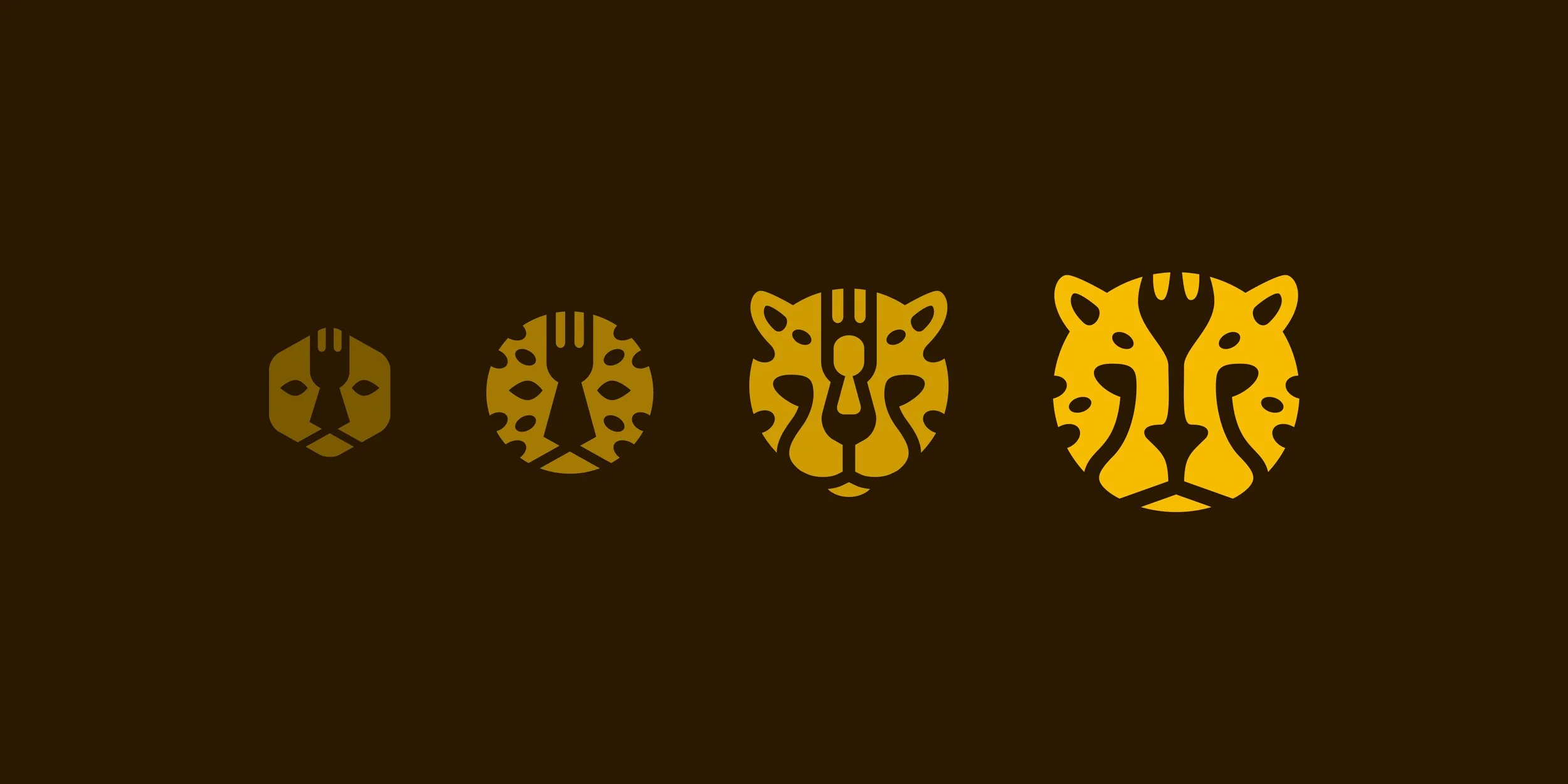
Concept development for Fastfood — combining the speed of a cheetah with a fork formed through negative space.
The Fastfood logo, for example, combines the face of a cheetah with a fork created through negative space. The finished mark is visually simple, but getting there required reducing two different ideas into one recognizable symbol.
That reduction is part of the design work.
3. Experience
When you hire an experienced designer, you are not only paying for the hours spent drawing your logo.
You are also paying for the designer's ability to recognize what works — and what does not.
Experience helps identify weak ideas before they reach the client.
It helps with typography, proportion, balance, reproduction, visual hierarchy, scalability, and knowing when an idea has been simplified enough.
I have worked independently as a freelance logo designer since 2009.
Over that time, I have designed more than 600 logos for over 500 clients across 46 countries. You can read more about my background and published work on my About page.
That accumulated experience becomes part of every new project.
4. Project Scope
“Logo design” can describe very different things.
One project might require a primary logo, black-and-white versions, and final files.
Another might require:
primary and secondary logo configurations
symbol and wordmark variations
app or social icons
color systems
typography
supporting graphic elements
brand guidelines
digital or print applications
The wider the identity system, the wider the scope of the project.
This is one of the reasons I prefer to price projects individually rather than forcing every business into the same predefined package.
5. Refinement and Collaboration
The first presentation is not necessarily the end of the design process.
Once a direction has been selected, details often need to be refined.
Proportions.
Spacing.
Typography.
Color.
The relationship between the symbol and wordmark.
Small changes can make a substantial difference to the final result.
My projects include unlimited revisions to the selected direction so that we can resolve those details properly. More information about concepts, revisions, timelines, and payment terms is available in my logo design FAQ.
6. Final Files and Technical Preparation
A finished logo needs to work beyond the designer's screen.
You might need it today for a website.
Later, you may need it for a business card, presentation, mobile app, sign, vehicle, uniform, packaging, advertisement, or something nobody anticipated when the logo was originally created.
Professional delivery therefore needs to include appropriate vector and raster formats.
For my projects, final files include AI, EPS, SVG, PDF, PNG, and JPG versions prepared for digital and print use.
I also provide lifetime technical support if a client needs help with the files later.
That part of the service rarely appears in a portfolio.
But it matters once the identity enters the real world.
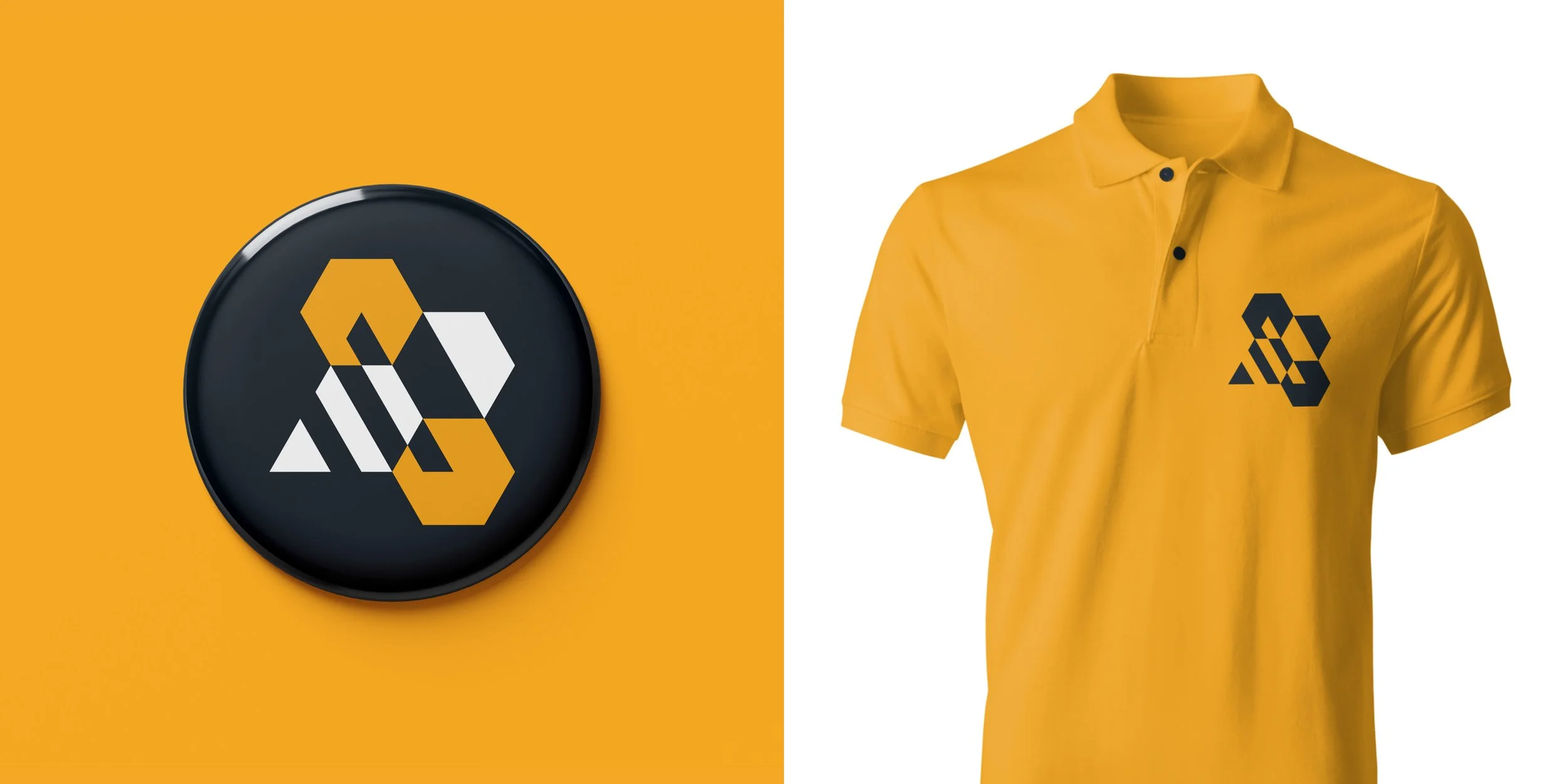
Anteon — a geometric identity designed to remain recognizable across different applications and backgrounds.
The Anteon identity is a good example. The symbol combines a bee, the letter A, and honeycomb-inspired geometry, but the final mark also needed to remain clear across different backgrounds and practical applications.
What Are You Really Paying for When You Hire a Professional Logo Designer?
The obvious answer is:
A logo.
But that is only the final output.
A better way to think about the fee is that you are paying for a decision-making process.
The designer starts with a very large number of possible directions and gradually removes the wrong ones.
Wrong typefaces.
Wrong symbols.
Wrong proportions.
Wrong visual associations.
Ideas that are too generic.
Ideas that are clever but impractical.
Ideas that look interesting at 800 pixels but fail at 20.
What remains should feel intentional.
Sometimes almost inevitable.
That is one of the paradoxes of logo design:
Simple does not necessarily mean easy.
A finished logo may look obvious precisely because unnecessary ideas have been removed.
Is a Cheap Logo Always a Bad Logo?
No.
Price alone does not determine design quality.
A talented designer early in their career may charge relatively little and produce very good work.
A temporary project may not require an extensive design process.
A founder testing an idea may reasonably decide that a major identity investment is premature.
There are situations where a lower-cost solution makes complete sense.
The problem begins when a business expects an inexpensive service to provide the same depth of research, originality, experience, refinement, communication, deliverables, and ongoing support as a more comprehensive professional process.
Something usually has to give.
That might be originality.
Research.
Communication.
Revision time.
Technical preparation.
Or support after the project ends.
The biggest risk is not necessarily that a low-cost logo will look “cheap.”
It is that the company eventually grows beyond the identity and has to solve the same problem again.
Does Paying More Guarantee a Better Logo?
Also no.
An expensive logo is not automatically a good logo.
A larger invoice does not guarantee stronger ideas, better taste, clearer communication, or a more appropriate identity.
This is why I would never recommend choosing a designer purely by price — whether that means selecting the cheapest option or the most expensive.
Look at the work.
Look at the quality of the portfolio across multiple projects.
Look at whether the designer can solve different types of problems rather than repeating the same visual formula.
Understand the process.
Read what previous clients say.
And find out who will actually be designing your identity.
“Nadir is the definition of a professional.”
— Ben Kaplan, Massachusetts, United States
Freelance Logo Designer vs. Branding Agency: Which Costs More?
In general, an independent designer has less overhead than a traditional branding agency.
An agency fee may support a larger team that includes:
account managers
strategists
creative directors
designers
copywriters
project managers
For a large organization, complicated rebrand, research-heavy engagement, or project involving many stakeholders, that structure can be useful.
But not every business needs it.
Working with an independent designer can create a much more direct relationship between the client and the person actually doing the work.
In my case, the person you contact is also the person researching, designing, presenting, refining, and delivering the identity.
There is no handoff from a sales team to a design team.
For startups and small-to-medium-sized companies primarily looking for a strong logo or focused identity, this can provide a useful middle ground between a low-cost marketplace service and a large branding agency.
The right choice depends on the scale of the problem.
Not simply the size of the company.
How I Approach Logo Design Pricing
I do not publish one fixed price for every logo because I do not believe every project should cost the same.
Instead, I quote each project individually based on its requirements.
A typical logo design project with me includes:
discovery and brand research
market and competitor research
three original logo concepts
detailed concept presentation
unlimited refinement of the selected direction
final vector and raster files
files prepared for print and digital applications
lifetime technical support
Initial concepts are normally presented within approximately 14 days.
More extensive identity projects can include additional elements such as typography, color systems, supporting graphics, or practical usage guidelines.
Before providing a quote, I prefer to understand what the business actually needs.
That keeps both the scope and the fee relevant to the project.
Learn more about my logo design process or see the frequently asked questions.
A Good Logo Is More Than an Attractive Shape
One thing I have learned from working on hundreds of identities is that visual simplicity becomes much stronger when there is an idea behind it.
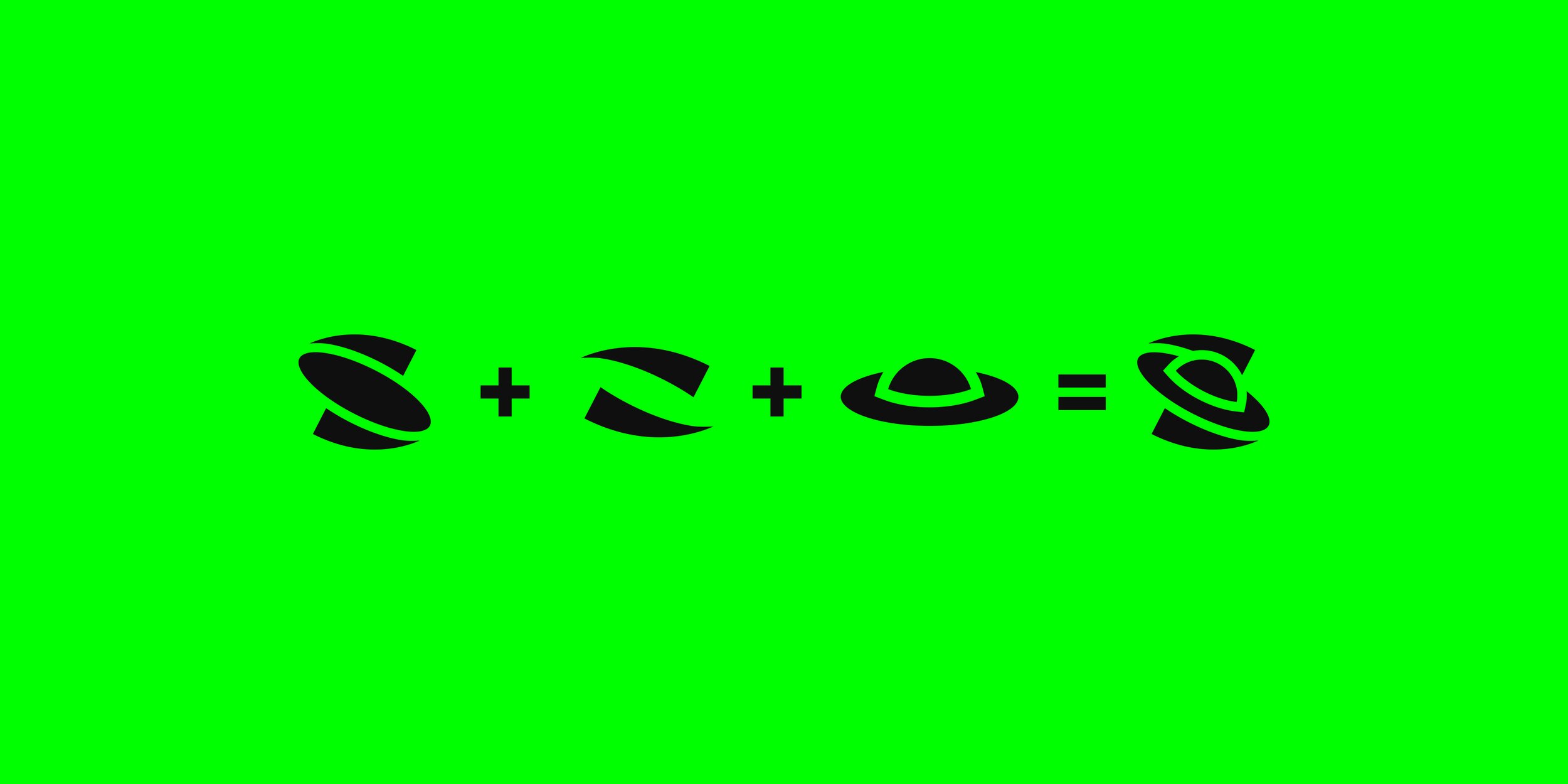
SaucerSwap — combining the letter S, the silhouette of a flying saucer, movement, and the idea of exchange.
The SaucerSwap logo is a good example.
The mark combines an S with the silhouette of a flying saucer, while its rotating form suggests movement and exchange — directly connecting the visual idea to the platform's swapping function.
Without that reasoning, it could simply have been another abstract symbol.
The concept gives the form a purpose.
How Much Should You Spend on a Logo?
There is no percentage of revenue or universal formula that works for every company.
Instead, I would consider three questions.
How important is this business?
If you are testing an idea that may disappear in three months, a major visual identity investment may not make sense.
If you are building a company you expect to operate for the next decade, the calculation changes.
How visible will the identity be?
A logo for a small internal project has very different requirements from one appearing across:
websites
mobile apps
packaging
advertising
storefronts
merchandise
vehicles
investor presentations
thousands of customer interactions
The more often people encounter the identity, the greater the value of getting it right.
What would changing it later cost?
Redesigning a logo does not only mean paying another designer.
An established business may also need to update:
websites, apps, signs, packaging, printed materials, documents, templates, uniforms, advertisements, social profiles, presentations, and physical environments.
That is why I tend to think of a professional logo as infrastructure rather than decoration.
It is a relatively small visual asset that may be reproduced thousands or millions of times during the life of a business.
What Should a Professional Logo Design Project Include?
Before hiring a designer, make sure you understand exactly what you will receive.
Original Design
The logo should be developed specifically for your business rather than assembled from a commonly available template or generic stock symbol.
Vector Files
You should receive scalable vector formats such as AI, EPS, SVG, or PDF.
These allow the logo to be reproduced at practically any size without losing quality.
Raster Files
PNG and JPG versions are useful for everyday digital applications.
Color Variations
The identity should function in its primary colors as well as situations requiring one-color, black, white, or reversed versions.
Clear Ownership Terms
Make sure you understand what usage and ownership rights are transferred when the project is completed.
Real-World Usability
A logo should not exist only as an attractive mockup.
It needs to work at realistic sizes, on different backgrounds, and in the places where the business will actually use it.
Before Asking “How Much?”, Ask These Questions
When comparing logo designers, price matters.
But these questions usually tell you much more:
Who will actually design my logo?
Is the work custom?
How many concepts will I receive?
What happens after I choose a direction?
How are revisions handled?
Which final file formats are included?
Can I use the identity across both print and digital applications?
What happens if I need help after the project is finished?
Does the designer's portfolio contain work I would genuinely be happy to own?
Once you know the answers, comparing prices becomes much easier.
You are no longer comparing two numbers.
You are comparing two services.
So, What Does a Professional Logo Really Cost?
It could be a few hundred dollars.
It could be several thousand.
For a comprehensive brand identity or large agency engagement, it could be considerably more.
The number by itself does not tell you very much.
What matters is the combination of thinking, originality, experience, process, deliverables, and support behind that number.
A logo should not be expensive simply because someone calls the project “branding.”
And it should not be cheap simply because the finished image looks simple.
The right investment is the one that reflects the quality and amount of work your particular business actually needs.
If you are choosing a logo designer, I would start with their work and process.
Then look at the price.
Not the other way around.
Have a Logo Project in Mind?
I’m Nadir Balcikli, an independent freelance logo designer creating minimal, modern logos and brand identities for startups and businesses worldwide.
Since 2009, I’ve designed more than 600 logos for over 500 clients across 46 countries.
Every project is handled directly by me — from research and concept development to refinement and final delivery.
If you have a logo design or brand identity project in mind, tell me a little about your business and what you need.
I’ll personally review your project and get back to you with the next steps.